TitanFusion Relay Framework – 6563338005, 3229124921, 9563628170, 8652108468, 6125477384
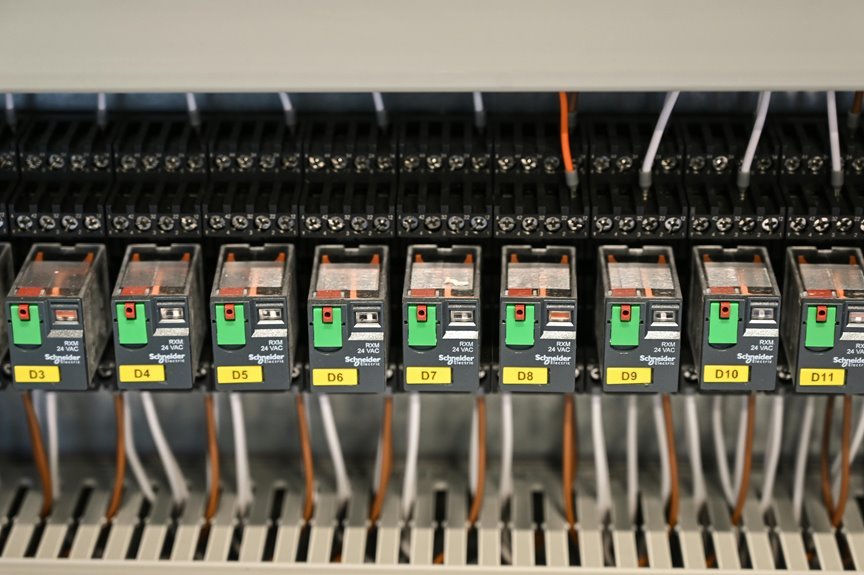
The TitanFusion Relay Framework presents a modular approach to coordinating distributed AI components. Its core emphasizes fault-tolerant routing via relay buses and real-time observability through streaming primitives. Governance-focused testing aims to preserve data integrity across diverse environments while supporting edge-to-cloud patterns. The framework invites scrutiny of deployment trade-offs and interoperability. What implications emerge for cross-team coordination and verifiable governance as systems scale, and where might the next challenges lie?
TitanFusion Relay Framework: What It Is and Why It Matters
The TitanFusion Relay Framework is a modular, interoperable system designed to manage and optimize the flow of data, commands, and control signals across distributed AI components. It emphasizes detailed scalability and secure interoperability, enabling autonomous teams to align objectives without central bottlenecks.
This framework fosters precise collaboration, rigorous testing, and transparent governance, supporting resilient, freedom-driven deployment across diverse operational environments.
Core Design: Modular Relay Buses and Fault-Tolerant Routing
Modular relay buses form the core wiring of the TitanFusion architecture, isolating components while enabling tightly controlled, low-latency communication across heterogeneous subsystems. The design emphasizes modular interfaces, predictable latency budgeting, and clear fault isolation boundaries. Routing remains fault-tolerant through redundant pathways and dynamic reallocation, enabling collaborative optimization. This approach balances autonomy with global coherence, supporting freedom within a disciplined, verifiable framework.
Streaming Primitives and Real-Time Observability in Practice
Streaming primitives provide a structured foundation for continuous data flow and synchronization across TitanFusion subsystems, enabling predictable throughput, bounded latency, and deterministic backpressure behavior.
The discussion analyzes observable metrics, tracing, and end-to-end latency budgeting, emphasizing patterns tradeoffs and practical tuning.
Real-time observability reveals bottlenecks, aids governance of backpressure, and supports collaborative optimization while preserving architectural freedom and reliable data integrity across diverse deployment contexts.
Deployment Patterns: Edge Analytics to Cloud-Native Orchestration
Deployment patterns for TitanFusion span from edge analytics to cloud-native orchestration, detailing how data processing, governance, and control loops migrate across a spectrum of compute environments. The approach emphasizes edge latency-aware processing, contextual governance, and resilient orchestration. Teams evaluate trade-offs between local responsiveness and centralized reliability, enabling scalable cloud scaling while preserving autonomy, collaboration, and transparent decision-making across heterogeneous infrastructures.
Frequently Asked Questions
How Is Titanfusion Licensed Across Multi-Tenant Deployments?
TitanFusion licenses multi-tenant deployments under flexible license regimes, balancing access and compliance. Deployment constraints are managed through scoped entitlements, tiered usage caps, and governance controls, enabling collaborative freedom while preserving auditability and centralized oversight.
What Are the Security Implications of Cross-Bus Fault Isolation?
Metaphorically, cross bus isolation minimizes security implications by constraining fault domains; thus, cross bus isolation reduces blast radii, enhances containment, and preserves system integrity, while transparent governance and consistent auditing sustain collaborative resilience and security posture.
How Does Telemetry Impact Latency in Highly Constrained Networks?
Telemetry latency increases in constrained networks, as limited bandwidth and processing power amplify delays and jitter, challenging timely data delivery; proactive compression, aggregation, and adaptive sampling mitigate impacts, enabling resilient telemetry without sacrificing essential freedom to act.
Can I Extend the Framework With Non-Jvm Languages?
Like a breeze breaking chains, yes. The framework supports cross language runtime portability via a plugin architecture, enabling language compatibility beyond JVM. Extensions should respect interface contracts and provide clear interoperability boundaries for robust collaboration and performance.
What Is the Roadmap for OSS vs. Enterprise Features?
The roadmap prioritizes roadmap alignment between OSS and enterprise tracks, with distinct licensing models guiding feature parity and release cadences, ensuring freedom to choose while maintaining collaboration, transparency, and predictable modernization across both communities.
Conclusion
The TitanFusion Relay Framework unifies modular buses, fault-tolerant routing, and streaming observability into a cohesive, edge-to-cloud ecosystem. Its governance-first testing and transparent decision-making enable autonomous teams to collaborate without sacrificing global coherence. As a bridge across environments, it keeps data flowing with verifiable integrity. In this landscape, the framework acts like a compass and clockwork—steady guidance aligned with precise timing, ensuring distributed AI components navigate toward shared, verifiable outcomes.